
By Kulwant Singh
Mohali has changed a great deal in the last four and a half years. New roads, better sewerage, safer junctions and brighter government schools have become part of everyday life in the city and its villages. For me, however, development is not just about infrastructure or the number of projects completed. It is about understanding people’s everyday problems and ensuring that their concerns translate into tangible results.
Having served Mohali for more than 35 years, I have developed a close understanding of its streets, villages, changing needs and challenges. Sometimes, an idea for development comes from my own assessment of an area. At other times, I get surveys conducted to understand the actual requirements. Very often, the starting point is a conversation with residents at my office or during a village meeting, where people share the problems they face.
Whatever the source, the approach remains the same: identify the need, take it to the appropriate department, pursue the matter through meetings and regular follow-ups, ensure the release of funds and see that the work begins on the ground.
I have never believed in making a noise about every piece of work undertaken. Public service, in my view, is about delivering results rather than seeking publicity. People sometimes tell me that I do not talk enough about my work. I take that as a compliment because I believe that the work itself should speak.
Development that touches everyday lives
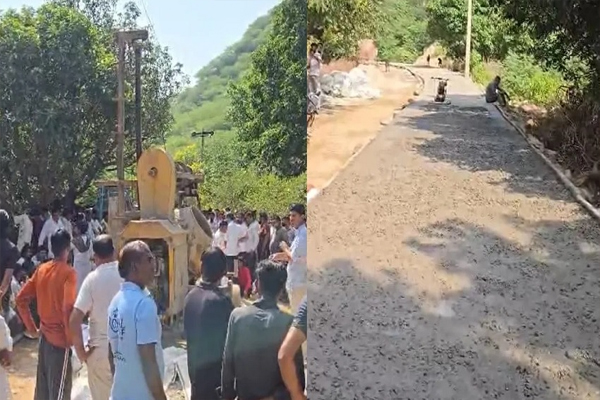
A visit to Mohali’s villages offers a glimpse of the work being undertaken. Link roads are connecting villages with one another and the main roads. Firni roads have been rebuilt, while narrow streets that once turned into muddy stretches during the monsoon have been paved with interlocking tiles.
In the city, old sewer lines, some of which were laid decades ago, are being replaced in phases. Main roads have been widened, and new roundabouts have been developed at busy junctions, with more such projects in the pipeline. These interventions are aimed at easing traffic congestion, improving road safety and making the city cleaner and more accessible.
Government schools are also receiving attention. New classrooms and smart boards are helping improve the learning environment, while better facilities are giving parents greater confidence in government education.
These projects do not happen overnight. Every proposal has to pass through several stages, from departmental recommendations and administrative approvals to the release of funds and execution. My office remains engaged with the concerned departments throughout this process because I believe that a project is not complete merely when it is announced. It is complete when people begin benefiting from it.
Taking people’s concerns to the Vidhan Sabha
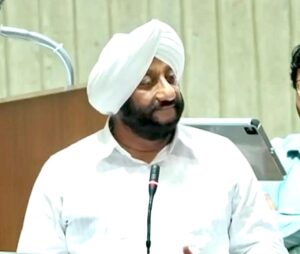
Not every problem can be resolved through departmental meetings or local interventions. Some require government-level attention, and I have consistently used the Vidhan Sabha to raise issues concerning Mohali and its people.
Public safety has been one of my priorities. In 2024, I raised a question about the installation of CCTV cameras at road junctions in Mohali. Today, more than 350 cameras are monitoring the city through a central command centre in Sector 79. I have also raised concerns about the S-shaped stretch of Airport Road near Sector 70, where repeated accidents have made road safety a serious issue.
Healthcare is another area that requires sustained attention. I raised the need for adequate medical staff at the new dispensaries in Sector 69 and Saneta, following which staff were posted there. I have also questioned whether private hospitals are providing free treatment to eligible poor patients as required under the applicable provisions.
Similarly, when vehicles belonging to visitors to major hospitals began spilling onto adjoining roads and creating traffic problems, I raised the issue with the government. When the problem persisted, I brought it up again. For me, raising an issue once is not enough if the people affected continue to face the same difficulty.
My interventions in the Assembly have also focused on social justice and the welfare of vulnerable sections. I have raised the issue of timely scholarships for Scheduled Caste students and called for an increase in minimum wages for workers in keeping with the rising cost of living.
Recently, I also raised the need to extend mid-day meals to the youngest children studying in government schools, including those in nursery and LKG. Every child deserves adequate nutrition, and there should be no distinction between young children and their older classmates when it comes to this basic support.
Mohali’s waste-management problem has also been a recurring concern. I have raised the need for a lasting solution, including the proposed processing plant at Samgauli and better waste management arrangements in villages.
My approach has always been to follow an issue through until there is movement on the ground.
Service beyond official responsibilities
I believe that the responsibility of an elected representative does not end with government projects or Assembly interventions. There are occasions when people need immediate support, and I have tried to contribute in whatever way I can.
This year, I am bearing the entire education expenses of three students preparing for NEET. Their financial circumstances should not become an obstacle to their dream of becoming doctors. I have also extended substantial financial assistance from my personal resources to a society working for children with autism.
Over the years, I have supported financially weaker families in building homes of their own. I have also remained associated with the development of community infrastructure. Dharamshalas and community centres have been constructed or renovated in several villages because such facilities are important for social gatherings and community life.
At the Civil Hospital in Phase 6, a new air-conditioned waiting hall has provided patients and their attendants with a more comfortable place to wait. I have also supported initiatives to help women acquire skills such as sewing, enabling those who had never earned independently to contribute to their household incomes.
Young people need opportunities and spaces to develop their talents. The development of playgrounds and support for local sporting tournaments are small but meaningful steps towards encouraging a healthier and more active generation. Whenever young people come forward with constructive initiatives, I try to extend whatever assistance is possible.
Much of this work does not receive publicity, nor do I believe it needs to. The satisfaction of seeing someone benefit is reward enough.
Standing with people when challenges arise
The real test of public service comes when problems become difficult and people’s patience runs out.
Mohali witnessed strikes by sanitation workers twice in the past two years, resulting in garbage accumulating at several places across the city. Last year, I intervened and brought the workers and the municipal corporation together to resolve their differences. The strike was eventually called off.
In September this year, when sanitation workers went on strike again, I once more sat down with them, listened to their concerns and facilitated a dialogue. The strike was subsequently called off. I believe that such situations require patience, dialogue and an understanding of the difficulties faced by both workers and civic authorities.
My engagement with people also extends beyond the city and its immediate surroundings. Years ago, I raised in the Vidhan Sabha the need for an insurance scheme for members of the Gadariya community, nomadic shepherds who travel from one place to another with their flocks.
This month, following action against a gang involved in stealing their sheep, members of the community visited my office to express their gratitude. Such moments reinforce my belief that public representatives must remain accessible to every section of society, particularly those whose concerns often go unheard.
Let the work speak
For me, politics is ultimately about people and the difference we can make in their lives. It is about a village street that no longer gets flooded with muddy water during the monsoon, a junction where traffic moves more smoothly, a sewer line that no longer overflows, a government classroom equipped with modern facilities or a financially disadvantaged student who can now pursue the dream of entering medical college.
These may appear to be small achievements individually, but together they contribute to a better quality of life.
I have always believed in working quietly, remaining accessible and pursuing people’s concerns until they are addressed. Political life may increasingly be dominated by public appearances, speeches and publicity, but I remain convinced that the real work of a public representative happens away from the stage.
That is where I prefer to be — listening to people, following up on their concerns and ensuring that promises translate into action. For me, politics is not about being heard the loudest; it is about making a difference where it matters most.
(The writer is Member of Punjab Legislative Assembly from Mohali)